Craft Before Claims: How a FULVERA Paddle Gets Built
A paddle's feel, durability and compliance are not decided in a spec sheet — they are decided on the line, at four phases where workmanship either holds or slips. This section opens each phase: what the stage controls, what goes wrong when it drifts, and what it means for the paddles you sell.
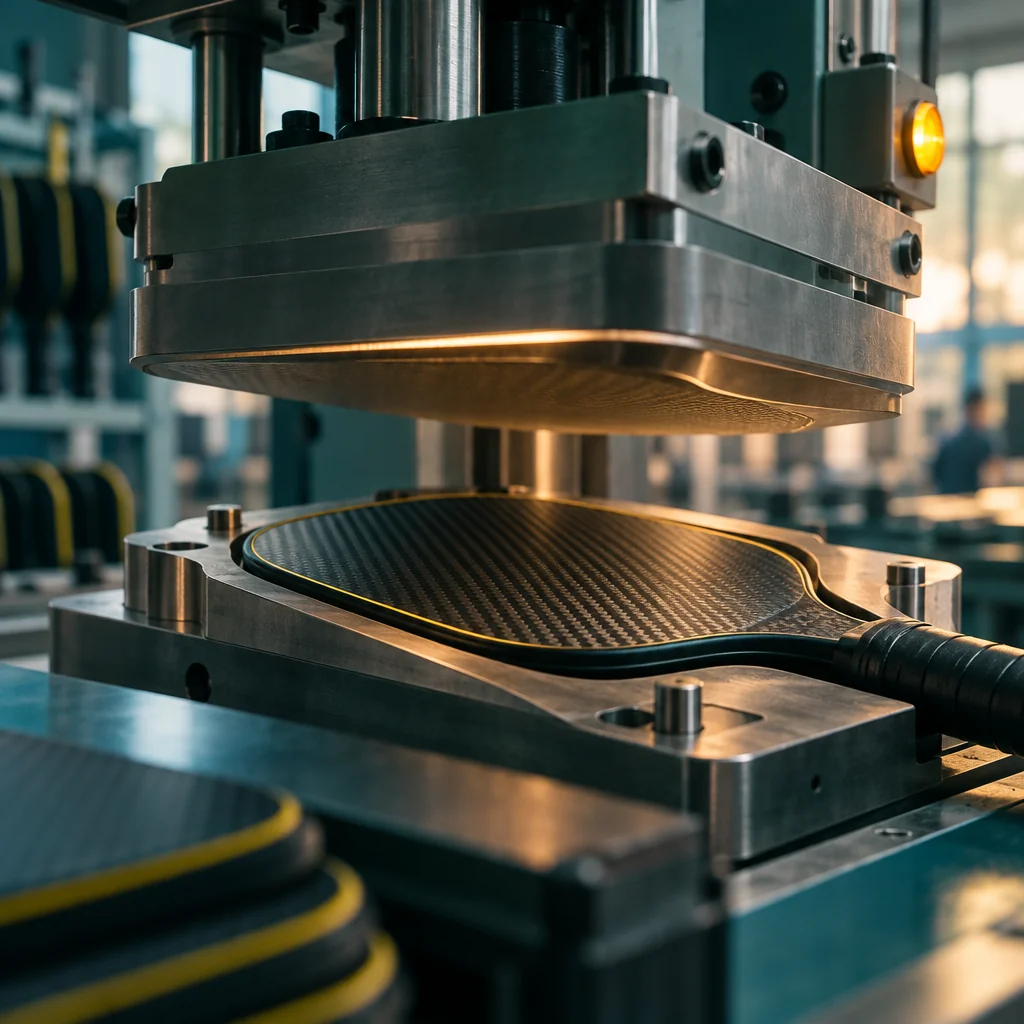
Four phases decide how your paddle turns out
The numbers below follow the real sequence a paddle passes through, grouped into the four phases where workmanship concentrates. Open any phase for its depth page — or follow one paddle through all eight stations of the line on the full factory tour.
Materials & Core Assembly
Prepreg, core sheets and resin verified at incoming inspection, then cut and stacked to the layup schedule. Decides bond integrity and the weight baseline.
Core technology & bonding 02 Line stage 03Heat-Press Molding
The programmed temperature-and-pressure curve cures the resin and bonds the laminate. Decides whether every paddle in the batch plays like the approved sample.
Molding & consistency 03 Line stages 04–07Surface & Finishing
Trim, texture, coating, decoration and grip. Decides the spin character of the face — and whether the finish stays inside the roughness baseline the lab tested.
Texture within the rules 04 Line stage 08Inspection & Dispatch
Dimensional, weight and deflection checks sign off every batch, then paddles leave with their document set. See the whole line and its equipment table.
The full line, station by stationWant the condensed version first? Inside the Line: the eight-stage Factory Tour.
Three outcomes your customers actually notice
Craftsmanship is not an adjective for marketing copy. It shows up in three measurable outcomes — and each one traces back to a specific stage on the map above.
Consistency, batch to batch
Once your paddle is certified, every production unit must keep matching the approved sample. Craft discipline — cure curves, layup schedules, texture baselines — is what keeps carton number forty the same as carton number one.
Yield instead of rework
A defect caught at its own stage costs a panel; the same defect found at final inspection costs a batch. Each craft page names where its stage rejects work, so problems are priced early instead of discovered late.
Room to tune your spec
Core thickness, cure window and finish texture are workmanship variables, not fixed constants. The wider and better-controlled that range, the more precisely a factory can build to your target feel — and prove it repeats.
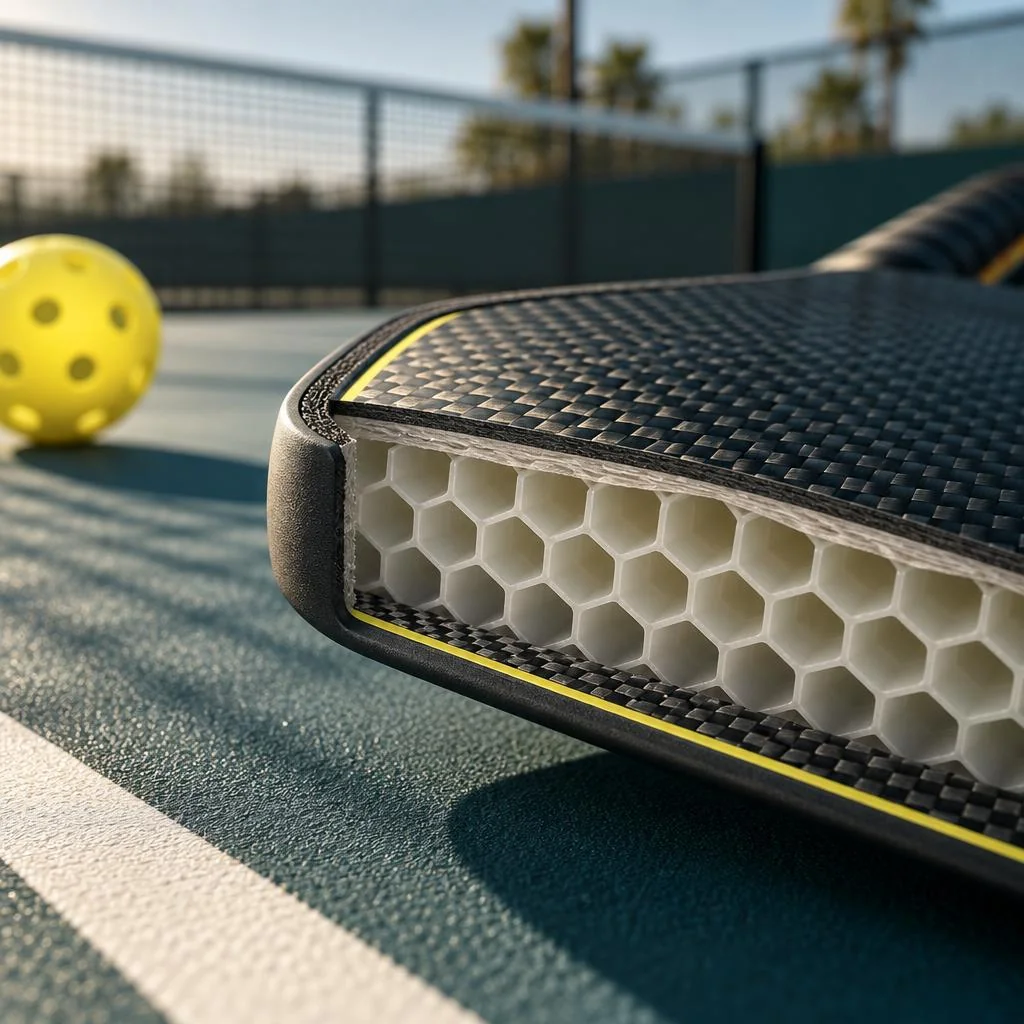
Every stage owns a control point
Nothing on this section describes an aspiration. Each phase above carries a defined control point — the layup schedule check, the recorded cure curve, the surface-roughness baseline — and a batch that fails its control point goes back to the stage that owns it.
Those control points feed the five-checkpoint QC pipeline: incoming material, in-process dimension, pre-test screening, third-party lab and batch consistency audit. The same pipeline protects your certification status after approval, because market-sample re-testing is how paddles get de-listed.
Sampling and production, on the record
Craft only matters if it survives contact with a purchase order. These are our standing sourcing terms — the same ones quoted against your spec, not introductory exceptions.
Sample, MOQ and bulk terms are maintained on one page so nothing drifts between conversations: Sourcing & Factory terms.
Go deeper before you spec
Questions buyers ask about craft
Do these pages describe your own line or the industry in general?
They describe the FULVERA line in the Dongguan cluster — the same stages, control points and equipment categories documented on the Factory Tour page. Industry context is included only where it helps you judge a supplier, and it is labeled as such.
Which of these stages can I influence with my own spec?
Most of them. Core material and thickness, face material and layup, grip build-up and finish texture are all specified per SKU. Some variables interact — core and face choices reshape each other's feel — so we confirm them together on a physical sample before bulk production.
How do you prove the craft held during my batch?
Every shipment leaves with a batch document set: the material composition declaration, a dimension and weight inspection report, and a batch traceability reference tied to your purchase order. Pre-shipment screening for deflection and surface roughness adds a checkable record against the certified baseline.
Does craftsmanship level change certification outcomes?
Yes. Deflection, PBCoR and surface roughness all respond to how well molding and finishing hold their control points. A line that drifts after approval is the classic de-listing scenario — which is why our pipeline re-screens production units against the certified sample rather than treating certification as a one-time event.