Inside the Line: How a FULVERA Paddle Is Made
From prepreg to packed carton, one paddle moves down a single line. This is that line, stage by stage — what happens at each station, the control point behind it, and the documents that leave with the batch.
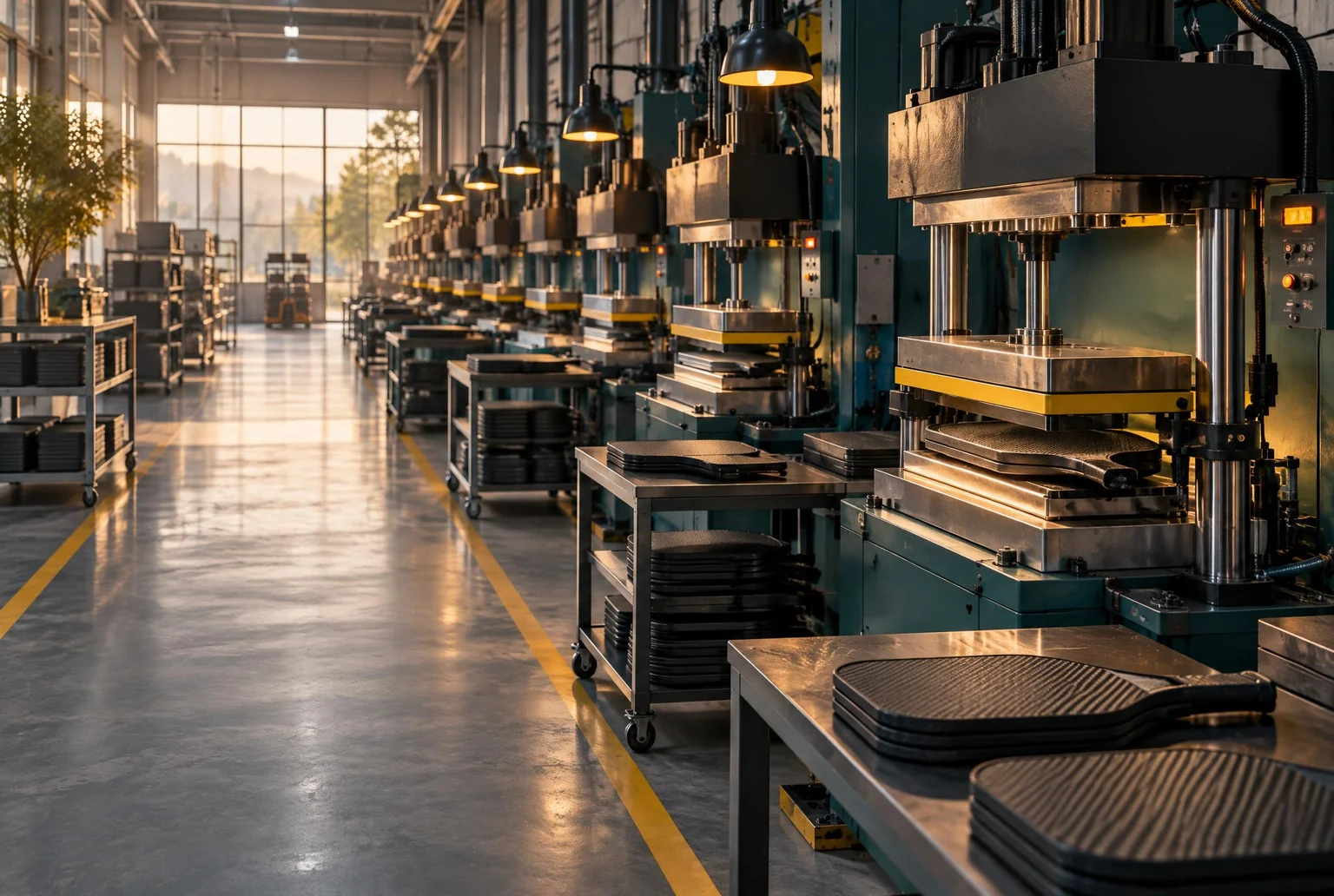
Built where the world's paddles are built
Dongguan, Guangdong produces an estimated 85% of the world's pickleball paddle brands, supported by more than 200 component and material factories in the same cluster. FULVERA production runs inside that cluster — core sheets, prepreg, edge guards, grips and packaging all come from vetted suppliers within shipping distance of the line.
This page follows one paddle through that line: eight stages in their actual sequence, each with a defined control point. Nothing on this page describes a capability we don't run.
Eight stages from prepreg to carton
The numbers below mark the real sequence a paddle passes through — not a list of capabilities. Each stage owns its control point, and a batch that fails one goes back to it.
Incoming Material Inspection
Carbon-fiber prepreg, polymer core sheets and resin arrive with supplier certificates that must match the approved material declaration. Incoming samples are checked for weave orientation, resin content and core density before stock enters the warehouse. Non-conforming lots are quarantined, not reworked.
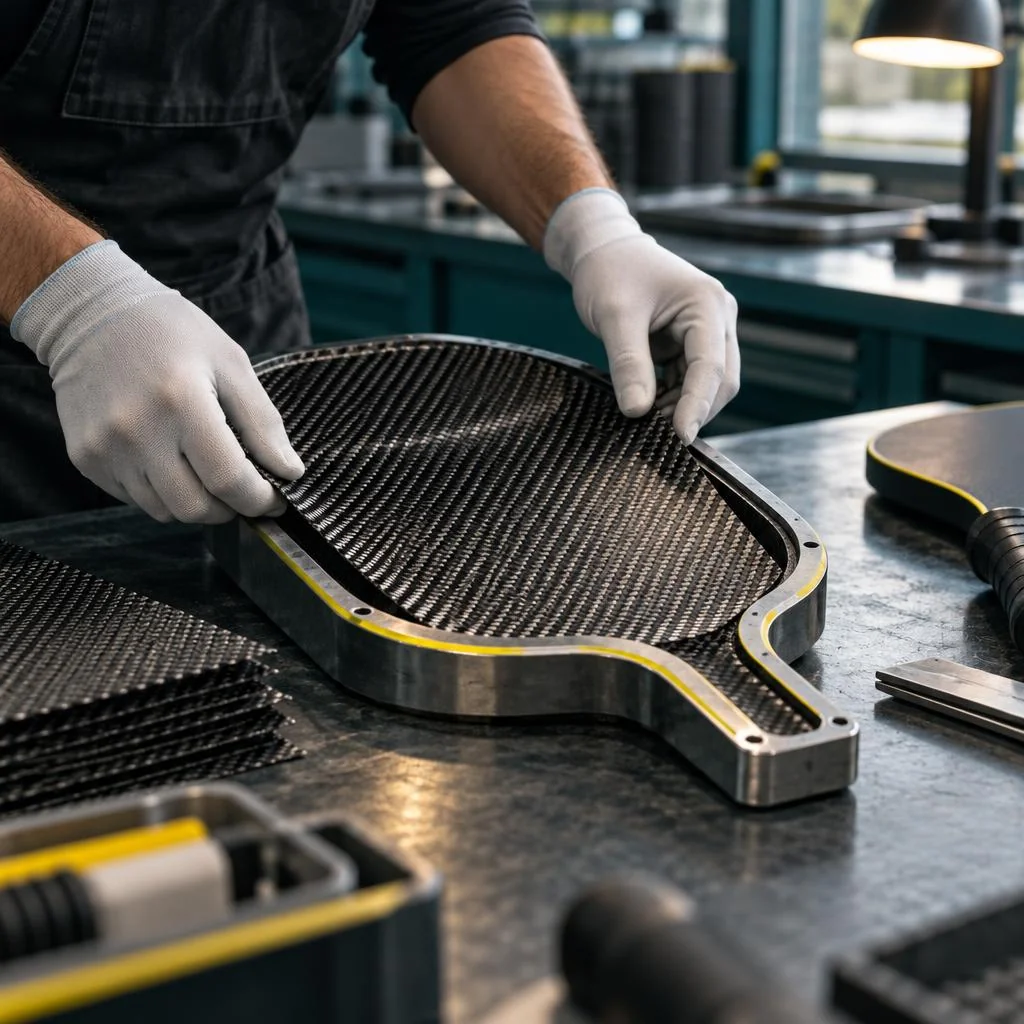
Cutting & Layup
Prepreg is cut to panel patterns, then stacked — face skin, core, face skin — in a matched mold. Ply orientation and stacking order follow the layup schedule, and each layer is verified against a template before the mold closes.
Heat-Press Molding
The closed mold runs a programmed temperature-and-pressure curve that cures the resin and bonds the laminate. That curve — ramp, dwell, cool-down — is the control point, because it sets layer adhesion and core shear strength. Molded panels are weighed against the target weight band.
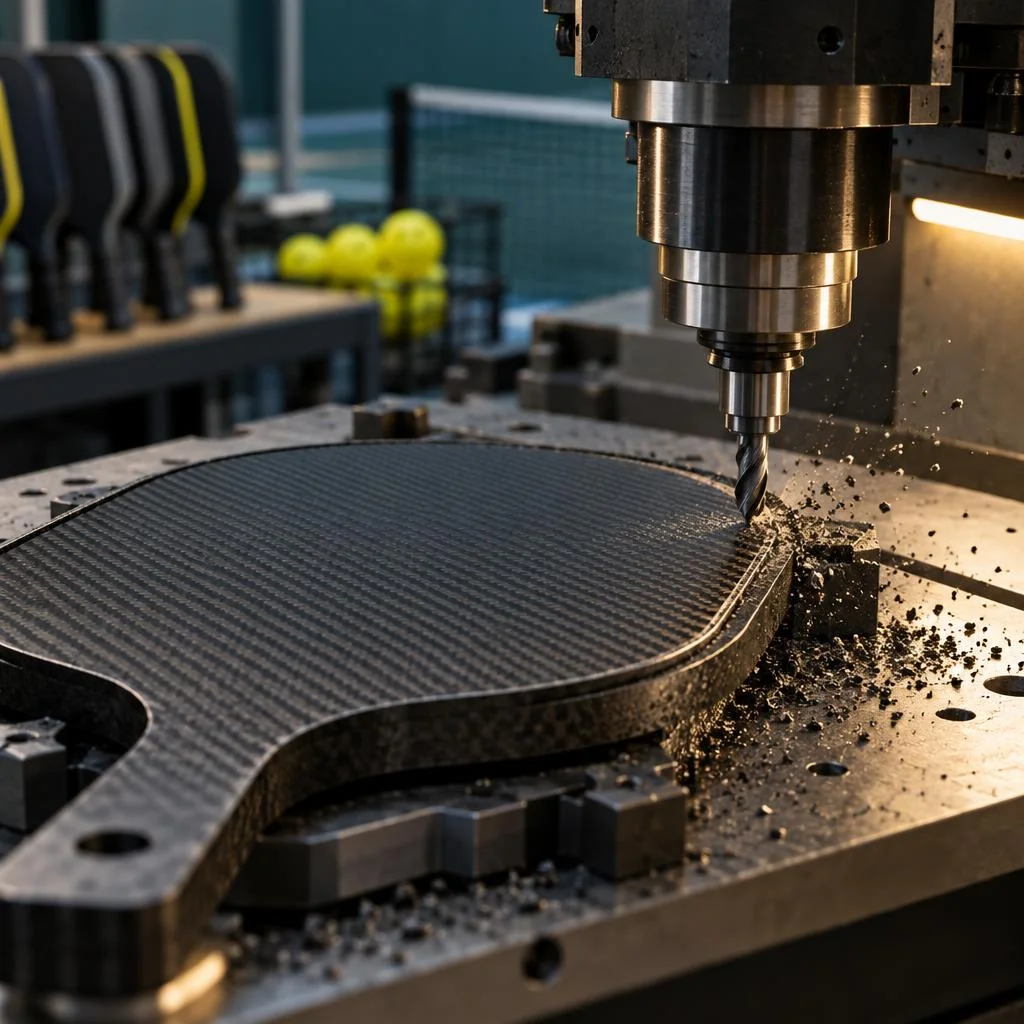
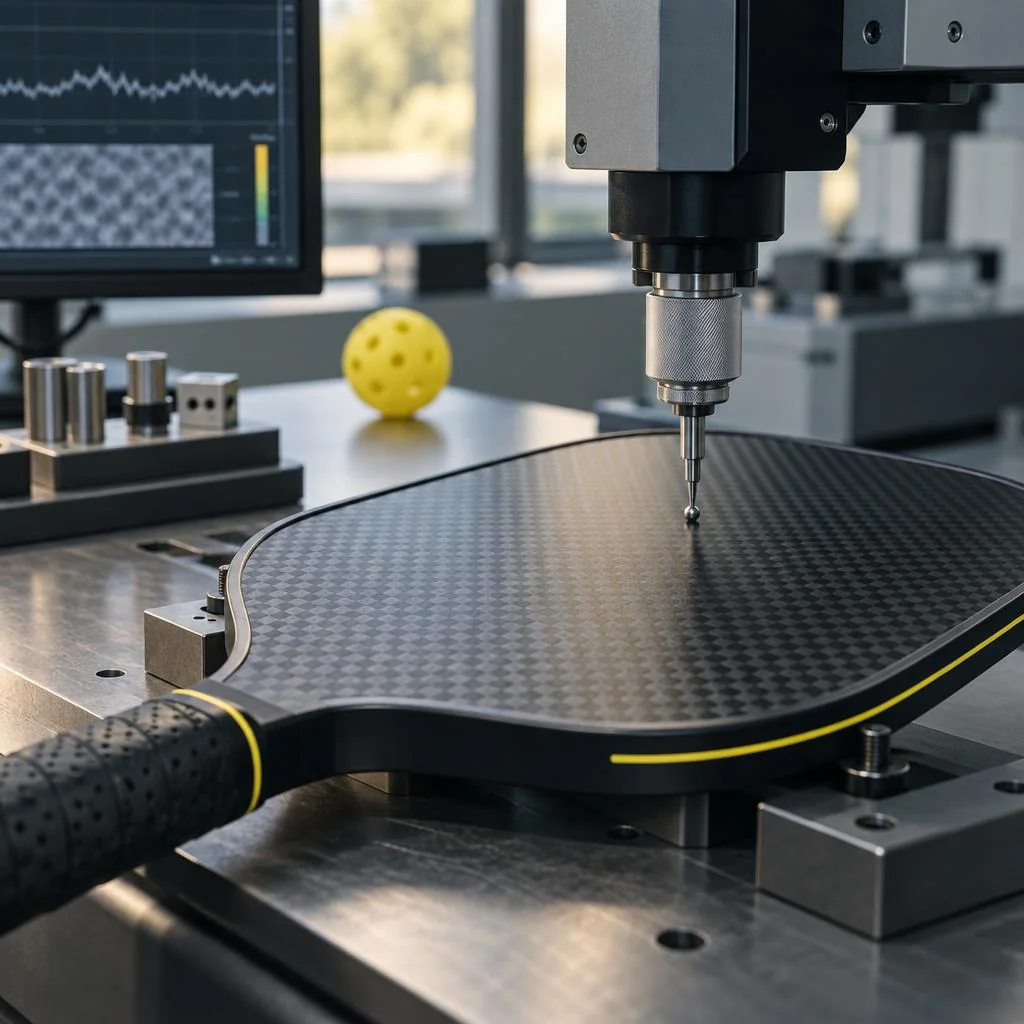
CNC Trimming
Cured blanks are cut to the approved outline on CNC routers working from the drawing file. The control point is contour tolerance: the paddle must hold the 17-inch length and 24-inch combined envelope before the edge guard is fitted, and edge-guard fit is verified on a fixture.
Surface Finishing
Faces are sanded, coated and cured to the target texture. Surface roughness is sampled against the certified-sample baseline, so the finish that leaves the line is the finish the lab tested. Over-textured faces are rejected here rather than at final inspection.
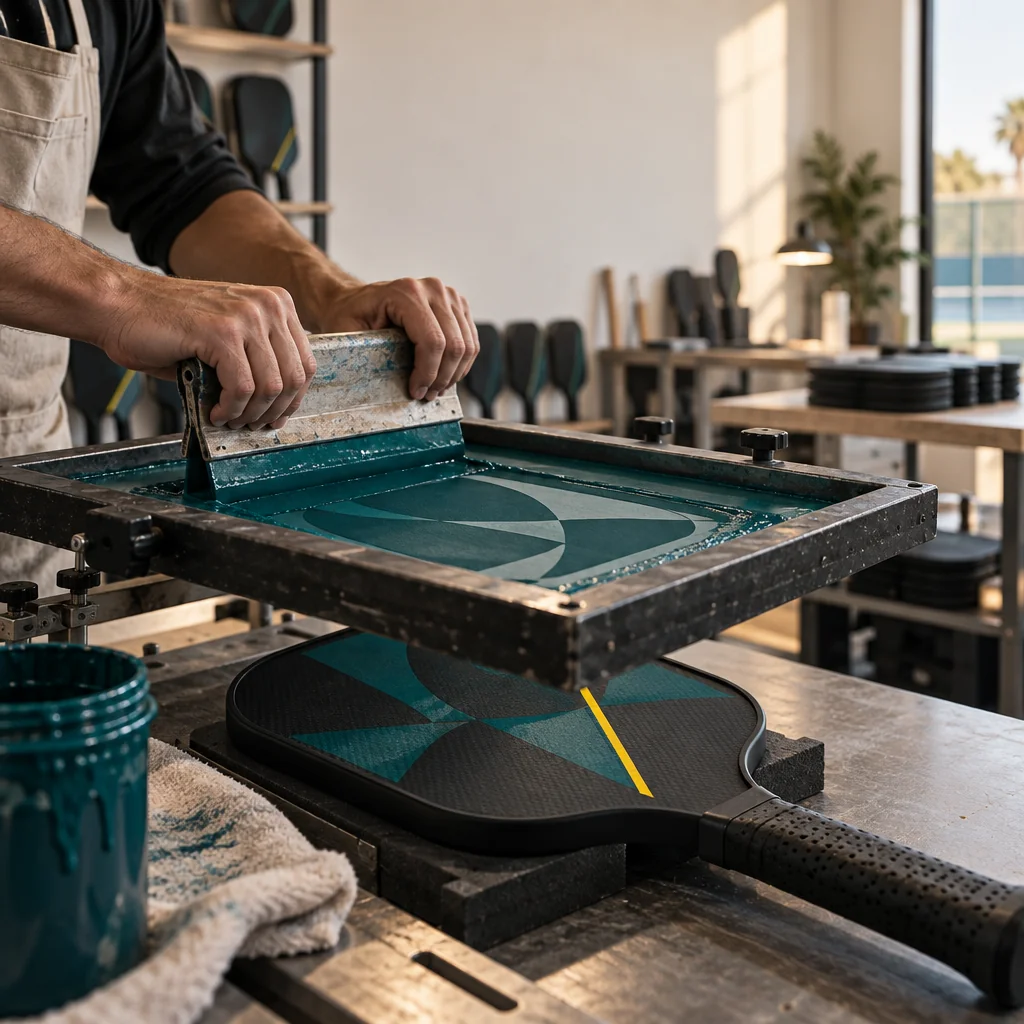
Printing & Labeling
Graphics and marks are applied by screen printing or heat transfer, then over-coated for wear resistance. Registration and ink adhesion are spot-checked per batch, and every mark stays inside the face area so dimensions remain compliant after decoration.
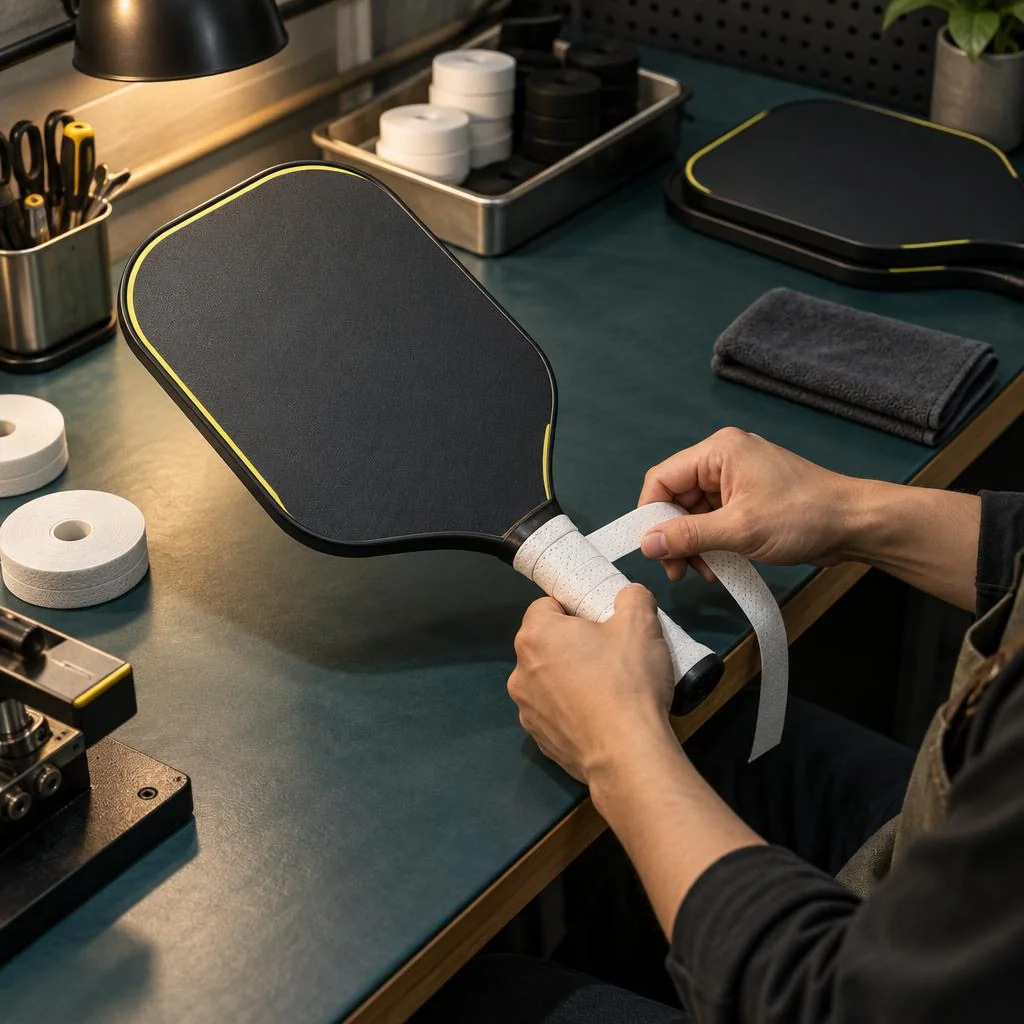
Grip Wrapping
Handles are built up to the ordered grip circumference and wrapped with the specified grip or overgrip. Wrap tension and end-cap seating are checked so the grip holds through play instead of loosening in the bag.
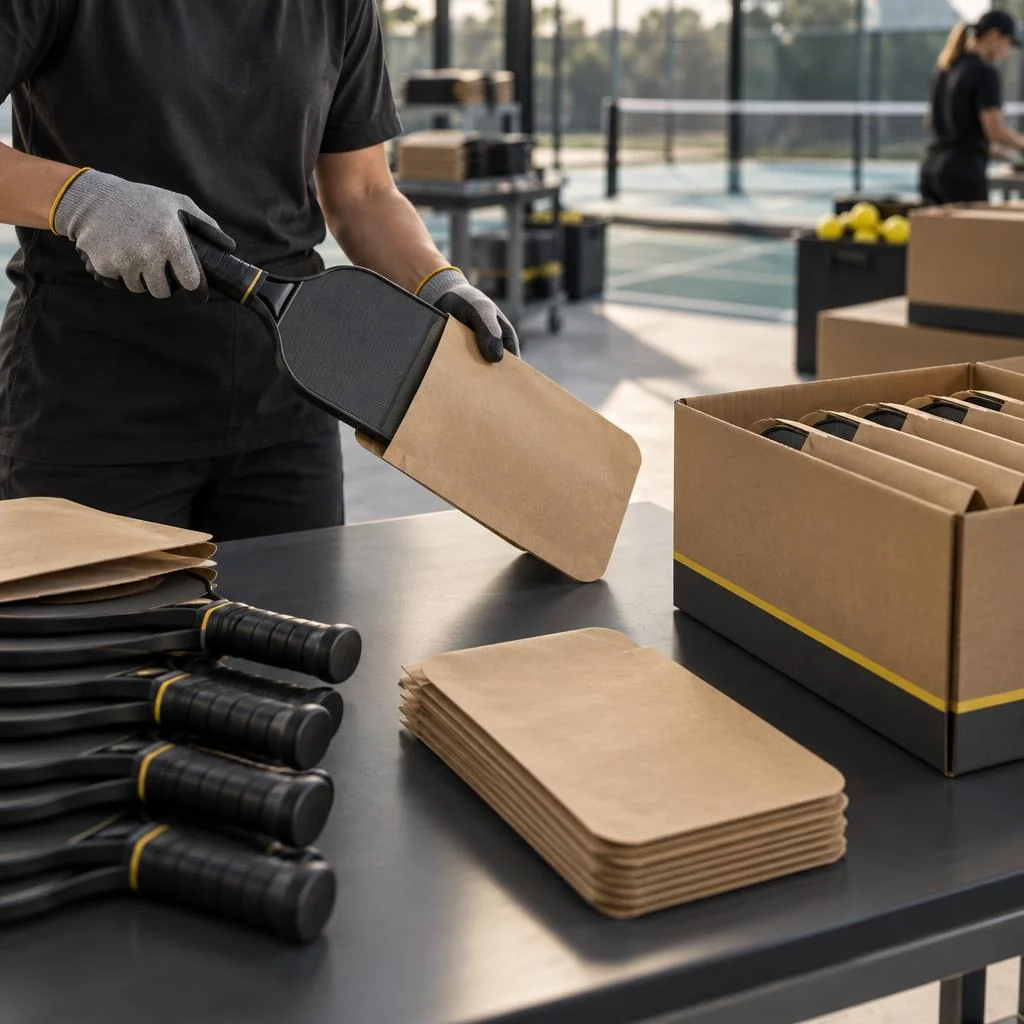
Final Inspection & Packing
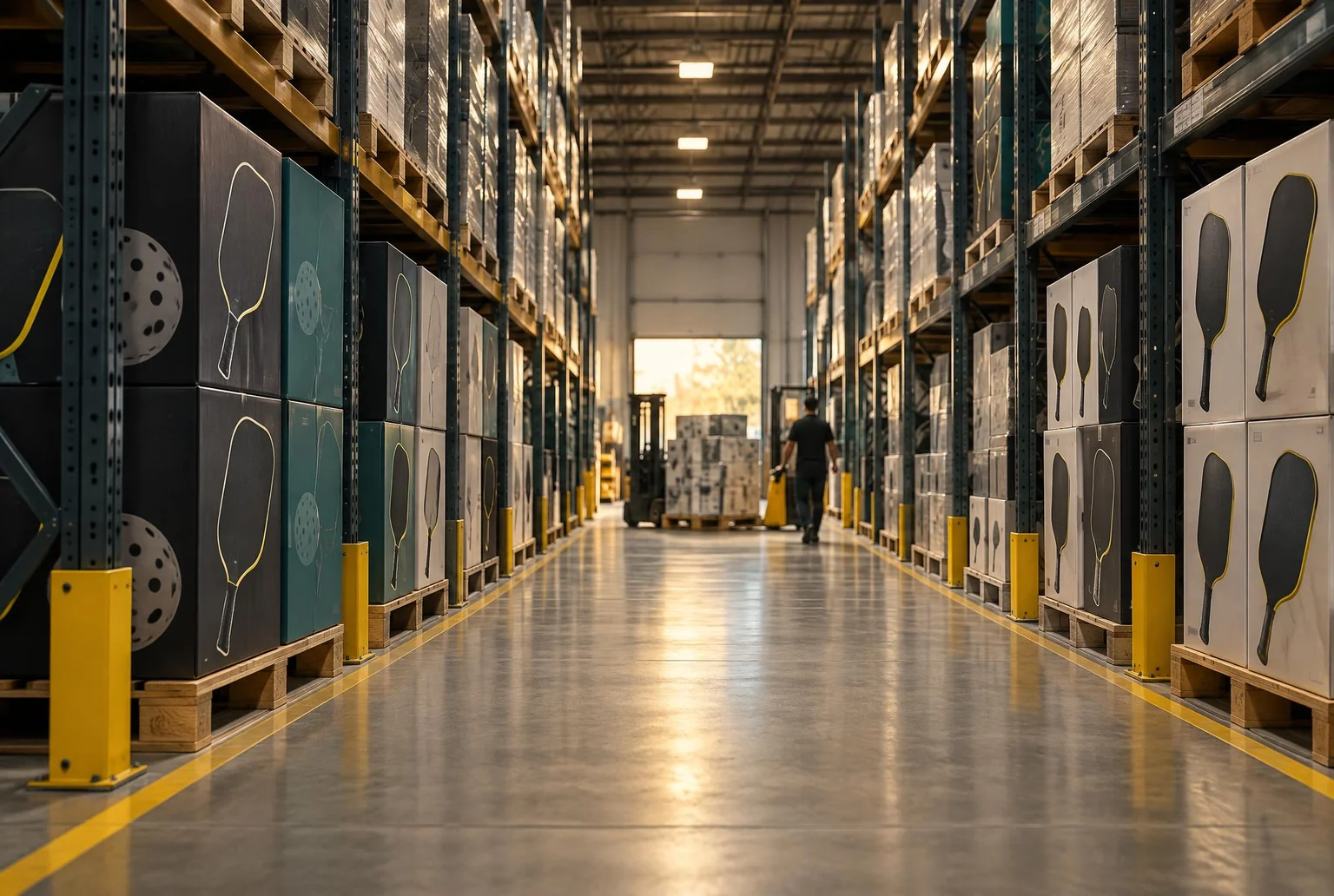
Every paddle passes a final dimensional, weight and visual check, with a deflection spot-check sample drawn per batch. Approved paddles are bagged, boxed and palletized together with the batch document set.
The line in six frames
Shot on the production floor and in the finished-goods warehouse — the same stages described above, in the order a paddle meets them.
What runs at each station
Equipment categories as configured on the line. The control point — not a brand name — is what we audit, record and report on.
| Station | Equipment Type | Role on the Line | Control Point |
|---|---|---|---|
| Incoming inspection bay | Material inspection benches with density and weave sampling tools | Verify prepreg, core and resin against the approved material declaration | Certificate match; weave orientation; core density sampling |
| Cutting area | Pattern cutting tables and panel cutting presses | Cut prepreg to the approved pattern set | Template match per panel; fiber orientation per ply |
| Layup station | Layup jigs and matched molds | Stack skins and core in the scheduled sequence | Ply count, orientation and stacking order vs. layup schedule |
| Molding | Platen heat presses with programmable cure profiles | Cure and bond the laminate under temperature and pressure | Temperature-pressure curve (ramp / dwell / cool-down); post-mold weight band |
| Trimming | CNC routers | Cut cured blanks to the approved outline and edge detail | Contour tolerance vs. drawing; 17 in / 24 in envelope before edge guard |
| Surface finishing | Sanding and coating lines with curing ovens | Deliver the target face texture and coating cure | Surface roughness sampled vs. certified-sample baseline |
| Decoration | Screen-printing and heat-transfer stations | Apply graphics and marks within the face area | Registration; ink adhesion; post-decoration dimension re-check |
| Grip assembly | Grip build-up and wrapping benches | Build the handle to the ordered grip size and wrap | Wrap tension; end-cap seating; grip circumference vs. order line |
| Final inspection | Dimensional fixtures, calibrated scales, deflection jig | Sign off every batch before packing | Length / width / weight vs. spec; deflection spot-check sampling |
| Packing & dispatch | Bagging, cartoning and palletizing line | Pack approved paddles with the batch document set | Carton count vs. purchase order; document set completeness |
Screened in-house, certified at the lab
Before a batch is approved for shipment, in-house screening samples deflection and surface roughness, and re-checks dimensions against the 17-inch / 24-inch limits. PBCoR and the full USAPA / UPA-A test set run at an accredited third-party lab — standard submission takes 4–6 weeks, or 3–8 business days expedited.
Every shipment leaves with its batch document set:
- Material composition declaration (face, core, edge guard, grip)
- Dimension and weight inspection report
- Copy of the third-party lab report once certification is submitted
- Batch traceability reference tied to your purchase order
Lead times and order sizes
The figures below are our standing sourcing terms — the same ones quoted against your spec, not introductory exceptions.
Sample, MOQ and bulk-production terms are maintained on one page so nothing drifts between conversations: Sourcing & Factory terms.