Four Buyers, Four Playbooks
We don't publish client names or order books. We do publish how we work: four buying scenarios we handle week in, week out — each written as a playbook, from the setting to the delivered goods.

The shape of every case below
Each case follows the same three-part arc: the setting the buyer walked in with, the problem that stalled them, and the playbook we ran. Results are stated as ranges you can check against our standard service terms — sampling in 7–12 business days, first batches in the 300–500 unit band, production in 25–35 days — never as invented sales figures. This is typical rhythm, not a promise: firm dates are confirmed on the purchase order. If you are still mapping who you are, start with the shorter scenario overview on Solutions.
From zero to shelf: a first private-label line
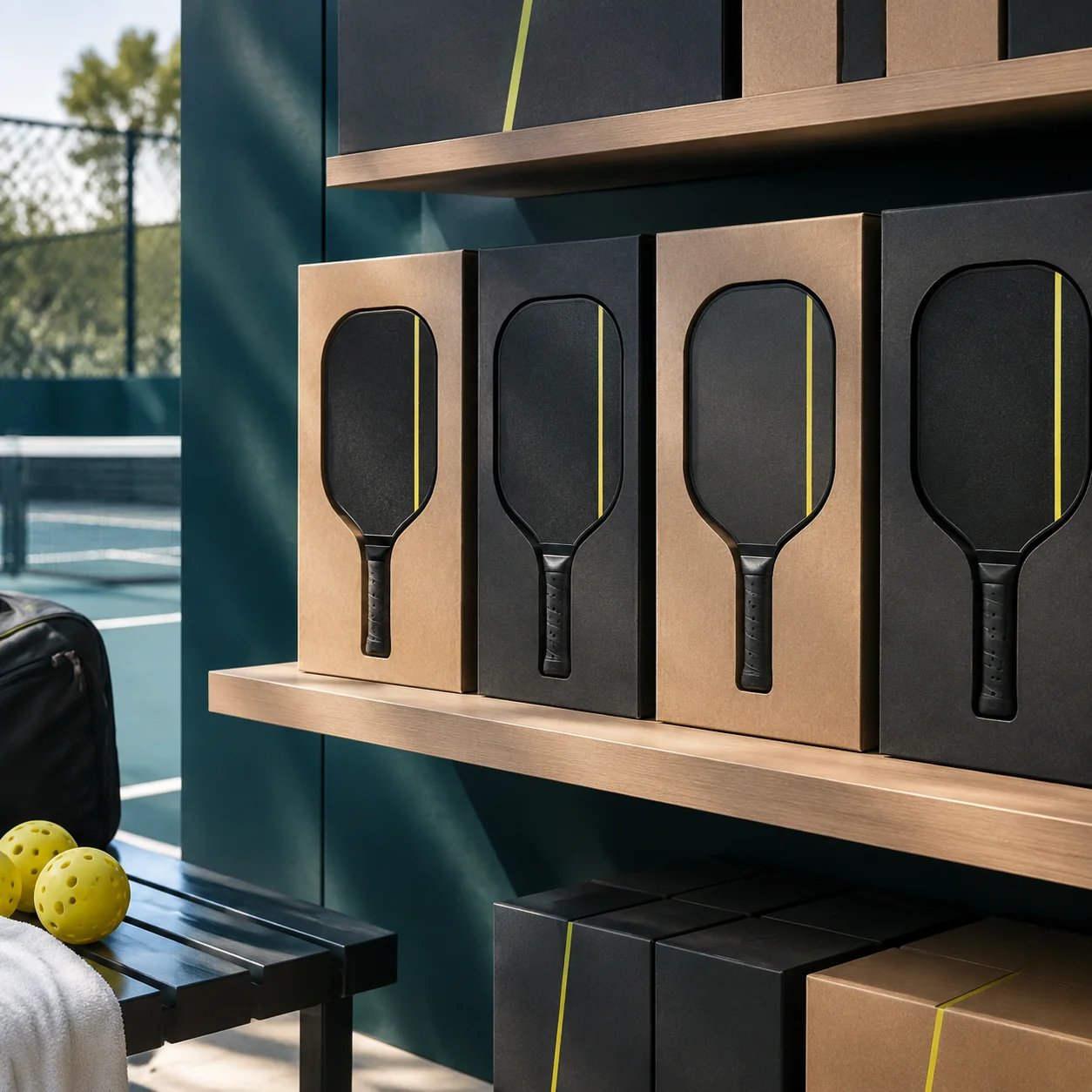
A buyer at a regional sporting-goods brand wants paddles on its own shelves next season. The company sells other categories well, has no paddle factory contacts, and nobody on staff who can read a construction spec.
The ProblemCatalog paddles all look alike once a logo goes on. The buyer doesn't know which face and core combination fits a mid-price retail tier, needs packaging that survives a retail shelf rather than a bulk carton, and cannot afford to commit a first batch to the wrong construction.
- Spec draft. Target price tier, player level and branding assets go in; a buildable spec sheet comes back — face material, core thickness, weight band, grip size and edge guard color.
- Sample round. 7–12 business days from the confirmed spec to a physical sample, revised until it matches the sheet.
- Retail packaging. Shelf-ready boxes, inserts and edge guard covers specified alongside the paddle, so the SKU lands sell-ready instead of bulk-packed.
- First batch. 300–500 units against the standard MOQ band, built inside the 25–35 day production window with per-batch QC documents.
Spec stuck at any point? The same spec sheet carries into sampling, certification pre-screening and production — it is never rewritten from scratch. See Support.
Typical playbook rhythm, not a promise — firm dates are confirmed when the purchase order is signed.
Test the listing before you trust the container
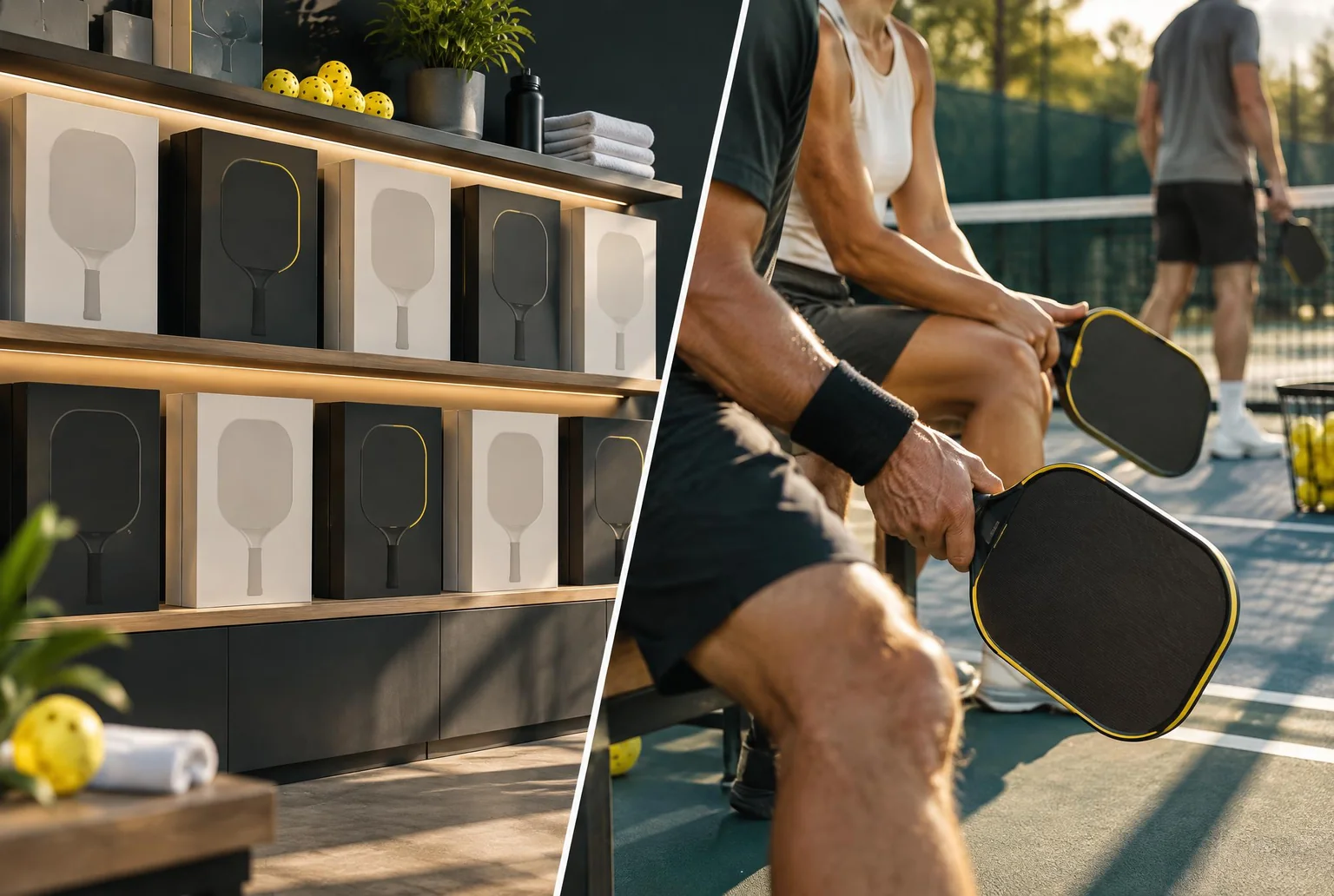
A marketplace seller with a track record in adjacent categories wants a paddle listing of their own — without tying up capital in a container before the listing has proven anything.
The ProblemTwo unknowns stack up: which construction will convert at their price point, and how to meet marketplace labeling and carton rules without building a prep operation of their own.
- Sample-first plan. One or two constructions matched to the target price band; samples in hand in 7–12 business days.
- Listing-grade documents. Spec sheet and dimension drawings for the listing page, including weight and material composition.
- First run with FBA prep. The first batch rides the standard 200–500 unit band and ships as FBA-compliant cartons — labeling and prep done before freight, not after arrival.
- Reorder on signal. When conversion proves out, repeat orders run through the same production window so restocks don't reset the calendar.
Certification claims on the listing? Pre-screening against USAPA / UPA-A happens before bulk, not after — see Quality & Certification.
Typical playbook rhythm, not a promise — firm dates are confirmed when the purchase order is signed.
Two hundred paddles built to outlast the season
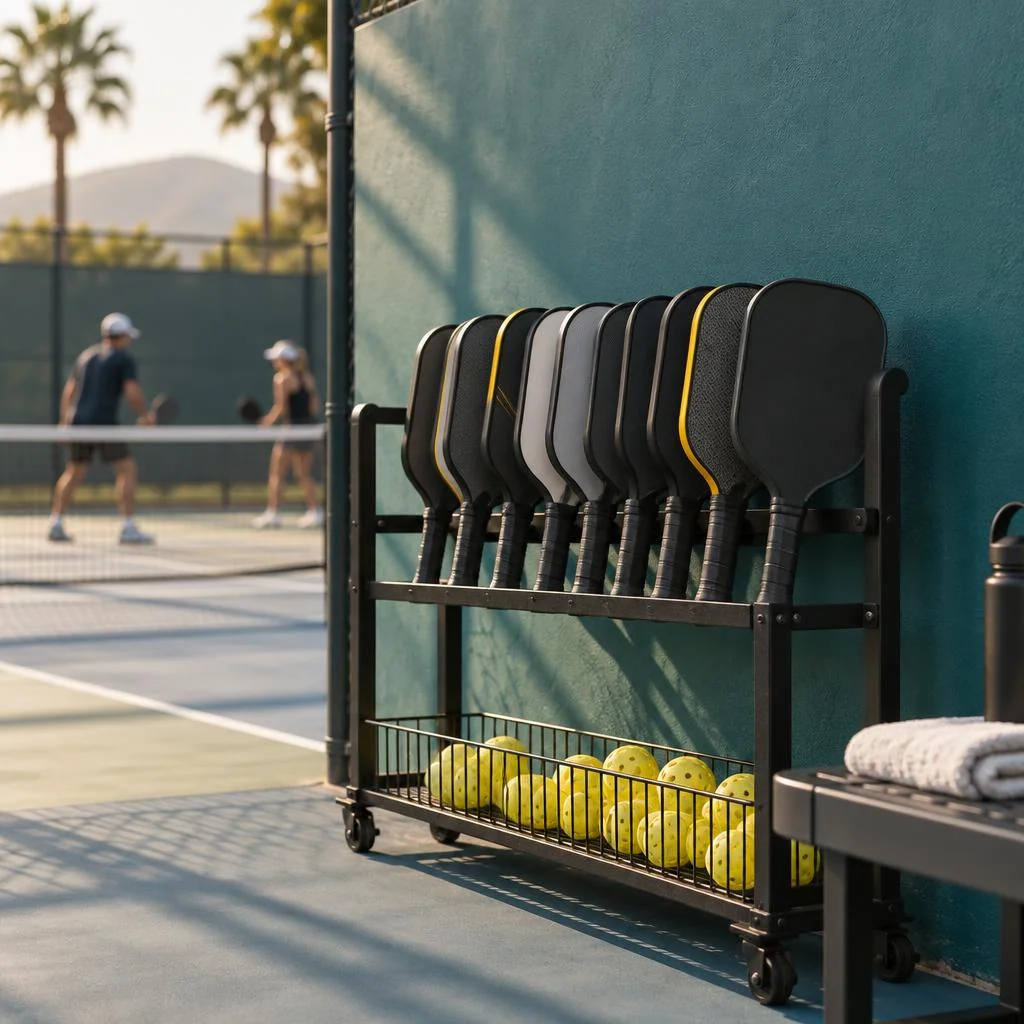
A club program runs lessons, rentals and open play on a packed calendar. Its paddles are shared equipment — handled hard by design, rotated across beginners and regulars alike.
The ProblemEntry-level paddles that photograph well chip at the edge guard and shed grips under heavy rotation. The club needs a batch that survives a season, delivered before the playing season opens, plus a plan for the paddles that wear out first.
- Durability-first spec. Construction chosen from the value tier, with the budget going to edge guard and grip quality instead of cosmetic finish.
- Sample check. One sample round in 7–12 business days to confirm weight and grip comfort for shared use.
- Batch build. 200 paddles through the standard 25–35 day production window, with delivery booked against the season calendar.
- Spares packed in. Spare grip tape and edge guard covers ship alongside, so worn items get replaced instead of retiring whole paddles.
Running an event with a hard date? The delivery window is planned backwards from it — see Support.
Typical playbook rhythm, not a promise — firm dates are confirmed when the purchase order is signed.
Three construction tiers, one container, one document pack
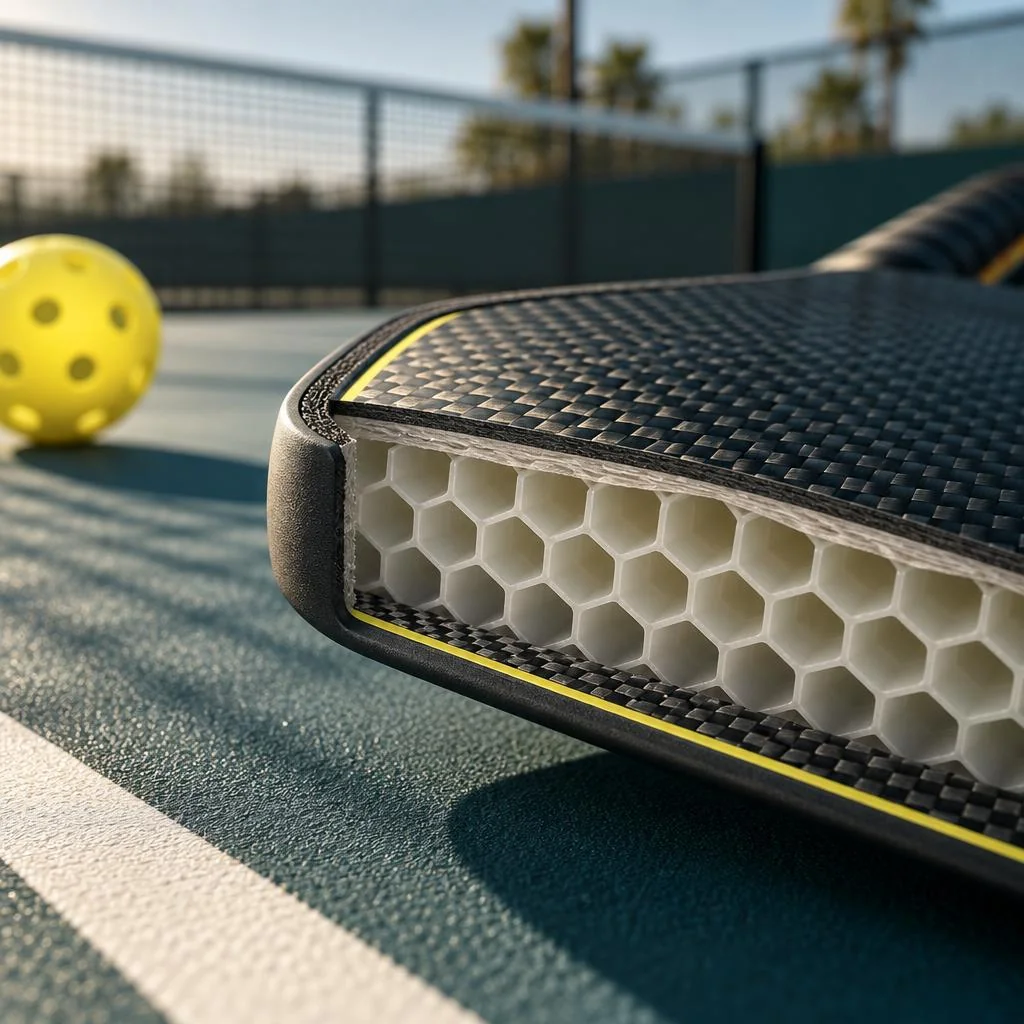
A regional distributor supplies several retail accounts sitting at different price points. Buying each tier from a separate factory means separate QC standards, separate freight and separate paperwork for every shipment.
The ProblemMulti-SKU orders usually break somewhere: constructions drift between production lines, documents arrive per factory instead of per shipment, and a container half-filled with one tier wastes freight.
- Tier map. Three construction tiers mapped to the accounts they serve, all written into one spec document set.
- Consolidated build. Tiers run inside the same 25–35 day production window so the container ships complete instead of part-filled.
- One QC pack. Inspection reports and material declarations unified across SKUs, each report tied to its purchase-order line.
- Split on arrival. One consignment, then divided per account and destination — one shipment to manage instead of three factory relationships.
What lands in the document pack is listed on Quality & Certification.
Typical playbook rhythm, not a promise — firm dates are confirmed when the purchase order is signed.