Pricing Built From the Spec Sheet Up
We don't publish a price list, because a per-unit number without the spec behind it isn't a comparable number. Here is exactly what moves the price, where MOQ starts, and the five cost segments inside every quote we send.
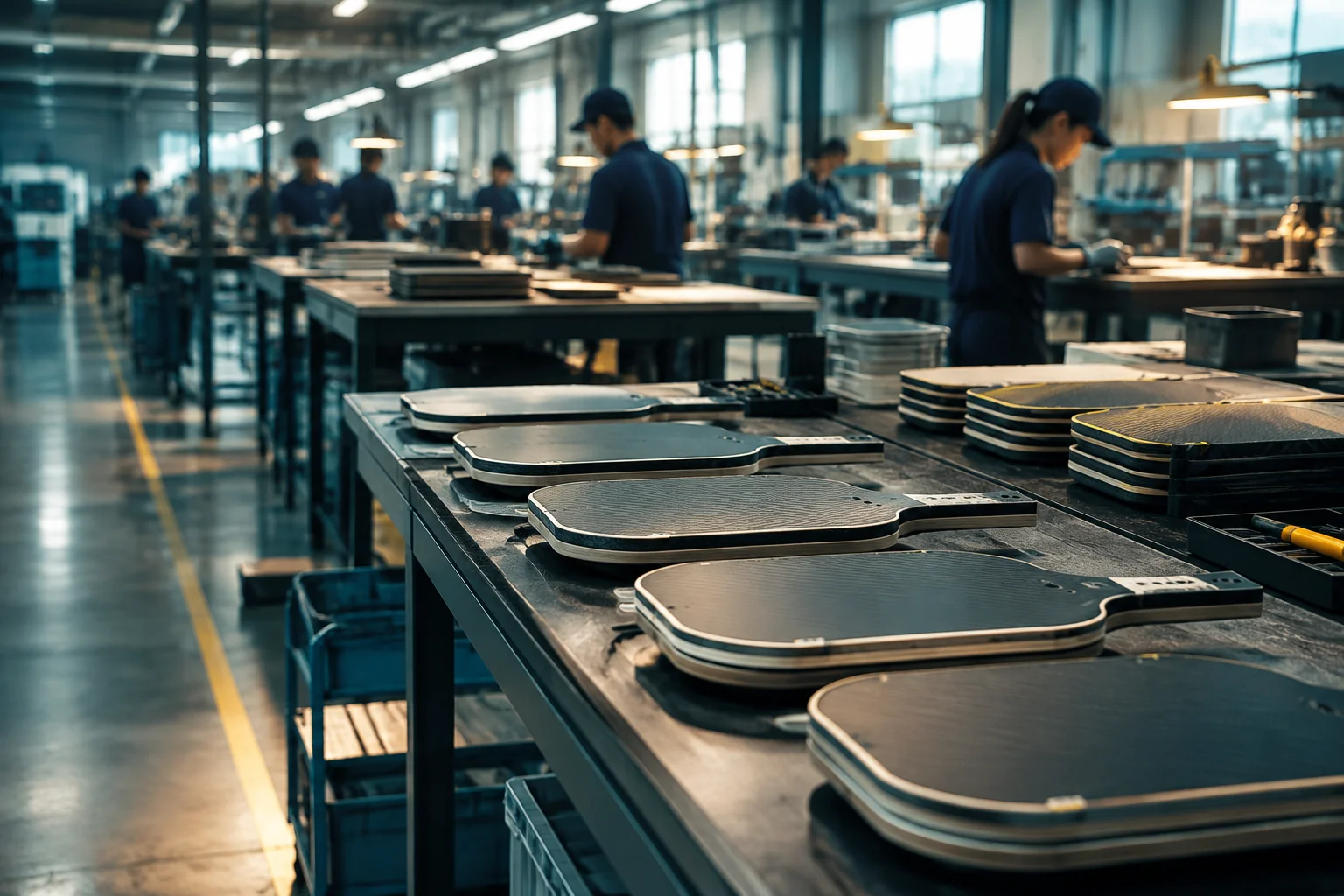
Six variables decide your unit cost
Change any one of them and the quote changes — predictably, and in the direction stated below. That is the whole pricing logic: quote based on spec, spec confirmed before sampling.
| Variable | Direction of Impact | What to Tell Us |
|---|---|---|
| Face material grade | Higher grade, higher unit cost — raw carbon sits above composite blends and fiberglass, and carries the performance ceiling with it | Target feel and price tier; we match the grade |
| Core material & thickness | PP honeycomb is the standard baseline; Nomex and polymer foam cores and 16 mm thick-core builds add material cost and change the play profile | Power, control or all-court priority; thickness preference |
| Printing process | More coverage, more cost — blank faces are cheapest, then single-color silkscreen, multi-color, and full-face print at the top | Logo, colors, coverage area on the face |
| Packaging tier | Each tier up adds per-unit and setup cost: blank poly bag, drawstring bag, printed retail box, retail-ready kitting | Sell-in channel: bulk, marketplace, or retail shelf |
| Order volume | Fixed setup and tooling spread across more units — higher volume pulls per-unit cost down inside your MOQ tier | First-order and repeat-order quantity |
| Certification needs | Adds a separate line item — USA Pickleball / UPA-A lab testing runs its own cost and timeline, standard 4–6 weeks or 3–8 business days expedited | Markets you sell into and whether listings claim approval |
Three ways in, one published MOQ band
Standard MOQ starts from 200–500 units per SKU — lower for private-label trial runs, negotiable by construction type. Those are the same terms published on Sourcing & Factory; nothing on this page invents a new tier.
Test Before You Commit
Validate a construction, a listing or a price point with a small first batch — sample round first, then a trial production run. Blank or basic print keeps the unit cost at the floor of the band.
Full Private Label Treatment
Face printing, edge guard color, retail packaging and per-batch QC documents — the configuration most brands and marketplace sellers run on first and repeat orders.
Multi-SKU, One Container
Several constructions and price tiers consolidated into a single shipment out of Dongguan — one contact, one QC standard, one set of shipping documents instead of one per factory.
Exact MOQ by construction type is confirmed in your quote — some builds carry setup constraints that move the entry point inside the published band.
Five segments inside every quote
When we send a quote, it maps to these five segments — so when you compare us against another factory, you're comparing like with like.
Materials
Face prepreg or fabric, core, grip and edge guard. The largest single driver — this is where the carbon-vs-fiberglass decision lands first.
Manufacturing
Layup, heat-press molding, CNC edge trimming and labor, plus tooling amortized across your order volume rather than billed as a surprise.
Certification & Testing
Lab submission, production-representative samples and batch audits. A separate line item — stated explicitly, never folded silently into the unit price.
Packaging
From blank poly bag to retail-ready kitting. Your packaging tier sets both per-unit cost and any print setup, confirmed at the proof stage.
Logistics
Consolidated freight, FBA-compliant carton prep and destination charges — planned backwards from your launch or restock date.
Itemized, Not Vague
We return a line-itemized quote against these five segments, not a single number. A quote missing its assumptions isn't comparable — ask any factory the same five questions.
One layer out of the chain, not a magic discount
In the standard paddle supply chain, the brand on the throat and the factory that built the paddle are usually two different companies — with importers, distributors and trading companies stacked in between, each adding margin without touching the paddle.
FULVERA coordinates vetted production lines inside the Dongguan cluster directly. You quote, sample and ship against the factory floor, with one contact responsible for spec, QC and freight. The saving is structural — one removed layer — not a promotion, and it shows up in every reorder, not just the first order.
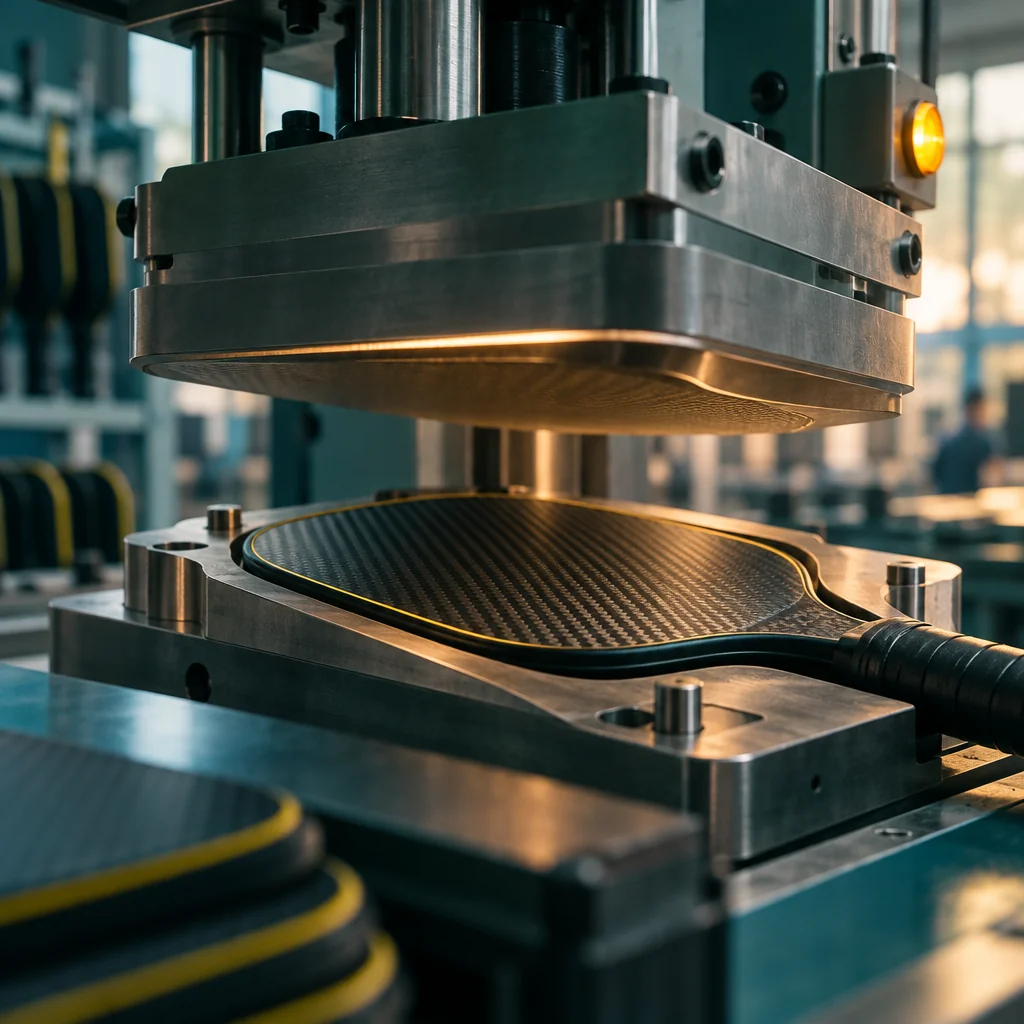
The timeline, stated once
Four steps from message to container
You approve at every gate before money moves to the next stage.
Send Spec & Volume
Construction (or the wizard's recommendation), target volume, packaging tier and destination market.
Receive a Line-Item Quote
Within 1 business day: the five cost segments itemized against your spec, with the MOQ tier stated.
Sample the Build
7–12 business days per round, revised until the physical sample matches the confirmed spec sheet.
Produce & Ship
25–35 days of bulk production, QC against the approved sample, then consolidated freight out of Dongguan.
Send one spec sheet — get one comparable number
Fill this in and our sourcing desk replies within 1 business day with a line-itemized quote and a lead-time plan. If you don't have a spec yet, say so — we'll start from the selection wizard's logic instead.
+86 155 5551 5351 (primary)
+86 195 6034 1319
+86 150 8381 0461
Response Time
Within 1 business day, Monday–Saturday (China Standard Time)
What to Include
Face and core preference, target volume, packaging tier and destination market — the six pricing variables above, in one message.
Before you compare quotes
Three guides that go deeper on the numbers behind this page.