Carbon Fiber Faces: Raw T700-Grade vs. Woven Carbon
Carbon is the stiffest face material in the lineup, and it plays that way — direct feedback, a control-leaning feel, and spin that starts at the surface. Here is how the two carbon constructions differ and who each one serves.
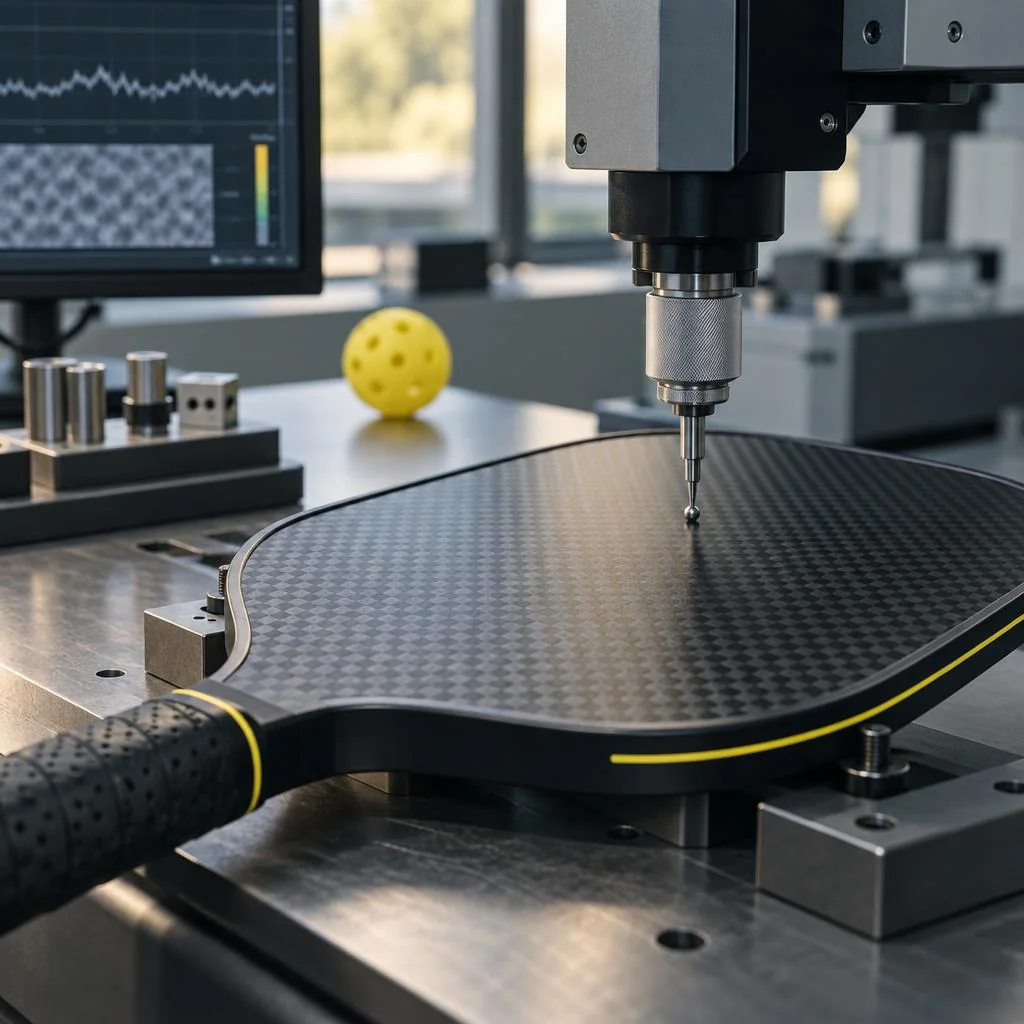
The carbon face, dimension by dimension
Five dimensions buyers actually decide on. Carbon trades forgiveness and price for precision and surface character — the rest of this page explains why.
| Dimension | What a Carbon Face Brings |
|---|---|
| Structure | Carbon prepreg plies bonded over the core — raw carbon lays plies that cure to a coarse, textured surface; woven carbon uses cross-weave cloth |
| Feel | Firm and direct — the ball leaves the face quickly with crisp, connected feedback on every contact |
| Spin | High potential — the coarser as-cured surface of raw carbon grips the ball cover and works with brushing swings, within tested surface limits |
| Durability | Strong surface wear resistance; the face outlasts its cosmetics, and the edge guard carries impact duty |
| Cost | Premium tier — carbon prepreg and the finishing steps that preserve surface texture cost more than glass |
How the two carbon constructions differ
| Aspect | Raw Carbon (T700-Grade Prepreg) | Woven Carbon |
|---|---|---|
| Surface off the mold | Coarse, uniform micro-texture that contacts the ball directly | Weave pattern sets a texture of its own; often finished smoother |
| Feel | The firmest, most connected response in the lineup | Firm, with slightly more compliance from the weave |
| Spin character | Built-in grip from the as-cured surface | Relies more on finish texture applied after molding |
| Where it shows up | Performance and pro-style builds | All-court and design-forward models, where the weave finish is part of the look |
Why surface texture drives spin
Spin comes from friction between the face and the ball cover during a brushing contact, so the surface that touches the ball matters more than any spec-sheet number. Raw carbon cures with a visibly coarser micro-texture than polished or coated finishes, and that texture grips the cover for the fraction of a second the ball is on the face. Woven carbon starts from a different surface and leans on the finish applied after molding.
Texture operates inside limits the sport actively tests: faces are screened against the certified-sample baseline at the finishing stage, and over-textured panels are rejected on the line rather than at final inspection. The same texture mellows with heavy play — expect the grip character to soften over a season, not disappear.
Where carbon pairs best
A carbon face changes meaning depending on the core behind it. Over a thick polypropylene core in the 14.1–16mm range, the build becomes a control paddle — firm surface, long dwell, soft finish on touch shots. Over a standard core, it becomes a precision build with a crisper launch. Paired with a Nomex core, it turns power-forward: the stiffest face on the hardest core. At the soft end of the spectrum sits fiberglass, which trades carbon's precision for forgiveness and price.
Who a carbon face serves
On court: the player profile
Intermediate to advanced players who generate their own pace and want spin from technique plus surface. Control-and-touch games get the most from the firm response. Pure beginners usually progress faster on a more forgiving face — most adapt to carbon once their contact grows consistent, and few go back.
In the catalog: the buyer profile
Premium retail lines and performance private labels. Carbon earns its price tier when the brand story leans on spin and pro-style construction, and when the SKU is headed for third-party certification. It is the natural top-of-range model above a fiberglass or composite entry tier.
Specifying carbon with FULVERA
Raw and woven carbon are both standing options in our layup library, and the commercial frame does not change with the material.
The surface texture you approve in sampling is the surface the line reproduces: roughness is sampled against the certified-sample baseline at the finishing stage, and the carbon grade is written into the material declaration that ships with every batch. Process detail: Factory Tour
Related guides
Carbon Fiber vs Fiberglass Pickleball Paddles: How the Materials Compare
The face material is the single biggest driver of how a paddle feels — here's what actually separates the two most common options.
Are Carbon Fiber Pickleball Paddles Good?
A practical look at what carbon fiber actually contributes to a paddle's feel, spin and durability — and when another face material makes more sense.
Best Pickleball Paddle for Spin: What Actually Generates It
Spin comes from a combination of surface texture, face material and swing technique — and all of it operates within limits the sport actively tests for.
Questions buyers ask about carbon faces
Is raw carbon or woven carbon better for spin?
Raw carbon generally holds more inherent grip because its coarse as-cured surface is what contacts the ball; woven carbon leans on its applied finish. Both stay inside tested surface limits, and swing speed still does most of the work — the surface raises the ceiling, the technique reaches it.
Will a carbon face feel too stiff for casual players?
Often at first. Beginners generally get more out of fiberglass flex, which absorbs off-center contact for them. Intermediates adapt quickly, and once the firm feedback feels normal, most stay with carbon for the precision it adds on placed shots.
Does the surface texture wear off?
It mellows. Gritty outdoor balls polish the surface fastest, and the grip character softens over a season of heavy play rather than vanishing. The finishing line holds production texture to the approved sample, so every batch starts from the same baseline.
What does T700 actually mean?
T700 refers to a grade of carbon fiber used in the prepreg we specify for raw-carbon faces — it signals the stiffness class of the fiber, and we write the material grade into the material declaration that ships with each batch. If you need a specific grade confirmed for your market, raise it in the spec sheet and we will confirm it in sampling.